
What Makes Thermalite Ultra-Clear®? The Materials Behind the World’s First and Only Certified Energy-Saving Shutter.
Not PVC. Not painted wood. Not a low-grade composite. Thermalite Ultra-Clear® is engineered from high-density polyphane, and the difference shows up in every single specification that matters.
The Ultra-Clear system is our state-of-the-art, patent-protected louvre motion system – it’s a purpose-built titanium rack-and-nylon pin mechanism that ensures no motion degradation over time for at least 25 years. This means zero call-outs and, most importantly, happy customers.
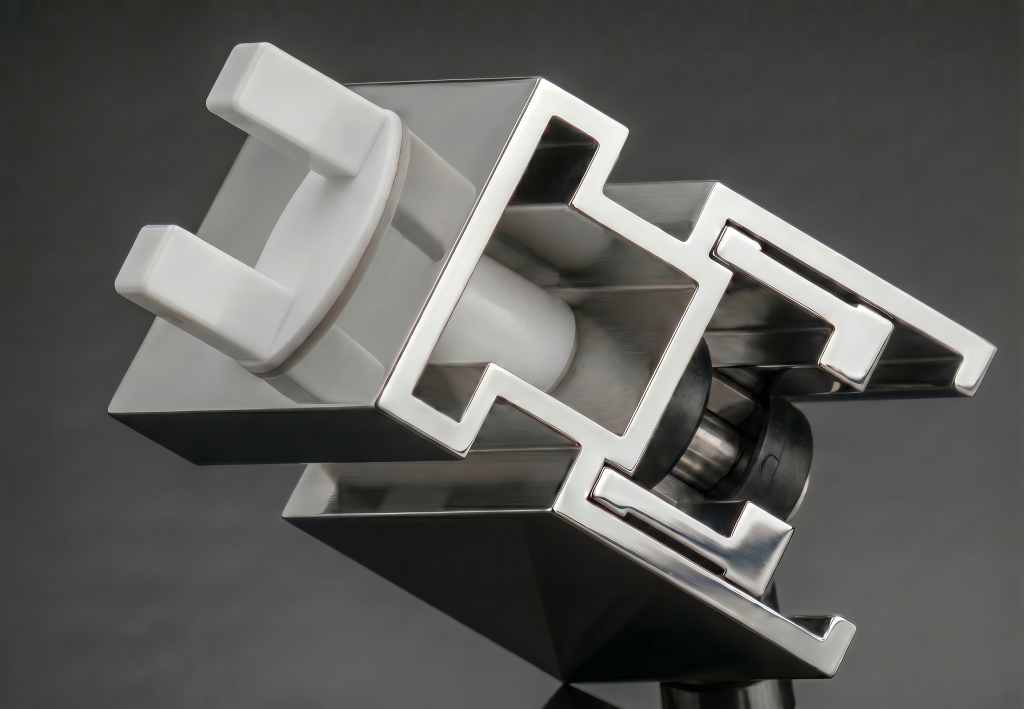
The Ultra-Clear system has a patent mechanism, meaning that trade partners have intellectual property protection.
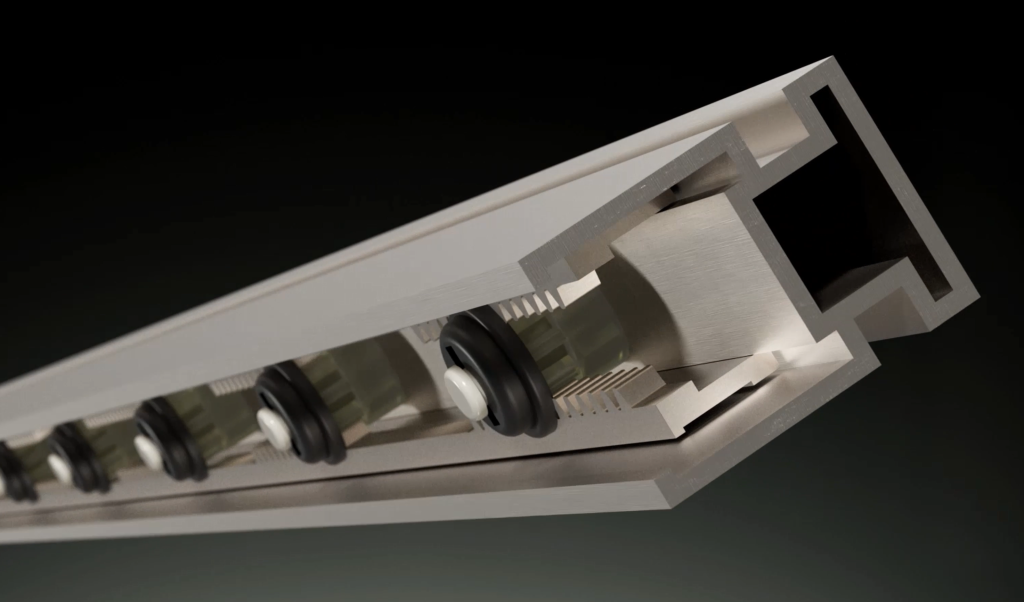
Thermalite Ultra-Clear® is designed for families and energy efficiency, but also takes into account daily use and consistent performance.
It’s the first question almost every customer asks when they see Thermalite Ultra-Clear® for the first time: “Is it plastic?” The honest answer is no, and the reason matters more than most people realise.
The UK shutter market has been shaped — and held back — by a handful of materials: extruded PVC, painted MDF, PVC-wrapped composites, and budget hardwoods that warp, yellow, bow and twist within a few seasons of British weather. The category has earned its reputation for being decorative rather than performance-led, and most shutter manufacturers have been content to leave it that way.
Thermalite Ultra-Clear® was engineered to leave that category behind entirely. It is the world’s first and only shutter to be independently lab-tested and certified as a compliant EPC installation, and the reason it can carry that certification is the same reason it doesn’t look, behave or age like the shutters most homeowners and trade professionals have seen before. The difference starts with the material itself.
If Thermalite Were PVC, We Couldn’t Make These Claims
A 62% certified reduction in heat loss.
A 44% higher R-value than the leading conventional shutter.
Panels up to 3 metres tall with no midrail.
A 25-year transferable guarantee that follows the property.
None of these numbers are possible on a PVC shutter — and that’s not marketing language, it’s material science. Density, structural integrity, dimensional stability and thermal resistance are all material properties, and they all come from what the panel is actually made of.
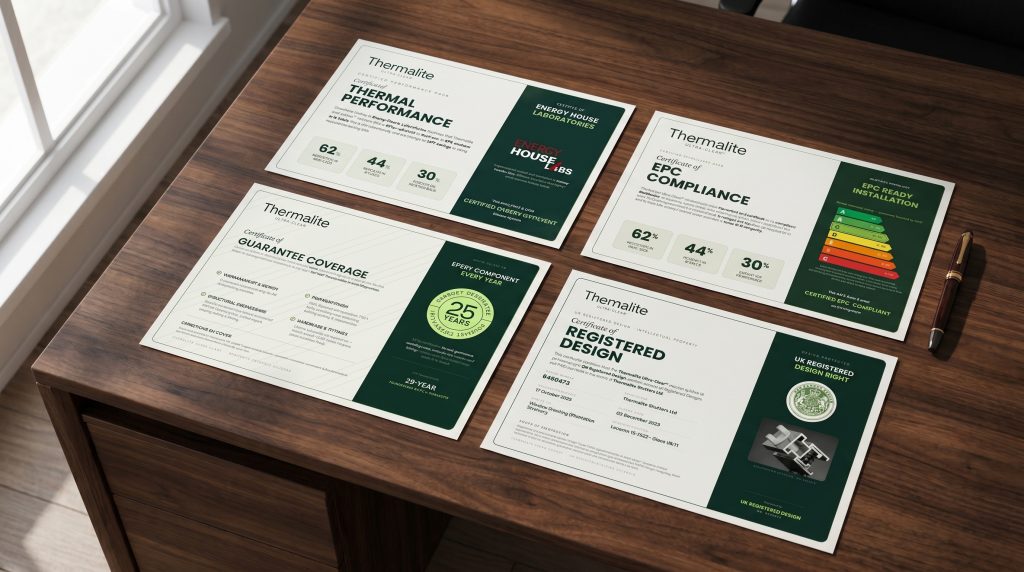
As a trade partner, being protected with proprietary rights to a patented and registered design means that you’ll have a competitive advantage against other companies in the window shutter industry.
This means that you’re granted territory-exclusive access to Thermalite Ultra-Clear™, ensuring a dominant market presence with a category-defining louvre motion system.
So what actually is high-density polyphane?
Polyphane is an engineered polymer composite. The single most important thing to understand about it — and the reason it sits in a different performance category to PVC — is that it is cured, not melted. Most PVC and low-grade composite shutters are extruded: the raw material is heated until it liquefies, forced through a die into a panel shape, and cooled. The shape is held by temperature, not chemistry. When that panel is later subjected to British weather — heat through a south-facing window in summer, cold and damp through a single-glazed sash in winter — the material remembers it was once liquid, and slowly returns toward that state. This is the mechanism behind every warping, bowing and twisting shutter complaint the industry handles.
“Thermalite Ultra-Clear® shutters are built with purpose-engineered materials that give it thermal qualities that outcompete any other shutter in the market.”
– Energy House
Curing is a different process entirely. The polymer is set through a chemical reaction rather than a thermal one, which means the structure of the material is locked in at a molecular level. It is dimensionally stable in heat, dimensionally stable in cold, and dimensionally stable across decades of UK weather cycling. It does not bow. It does not warp. It does not twist. That single difference in manufacturing process is what makes every other Thermalite Ultra-Clear® specification possible.

Our trade partners have experienced a 25% increase in conversions since partnering with us, stating that the craftsmanship behind Thermalite Ultra-Clear exceeds anything in their showrooms.
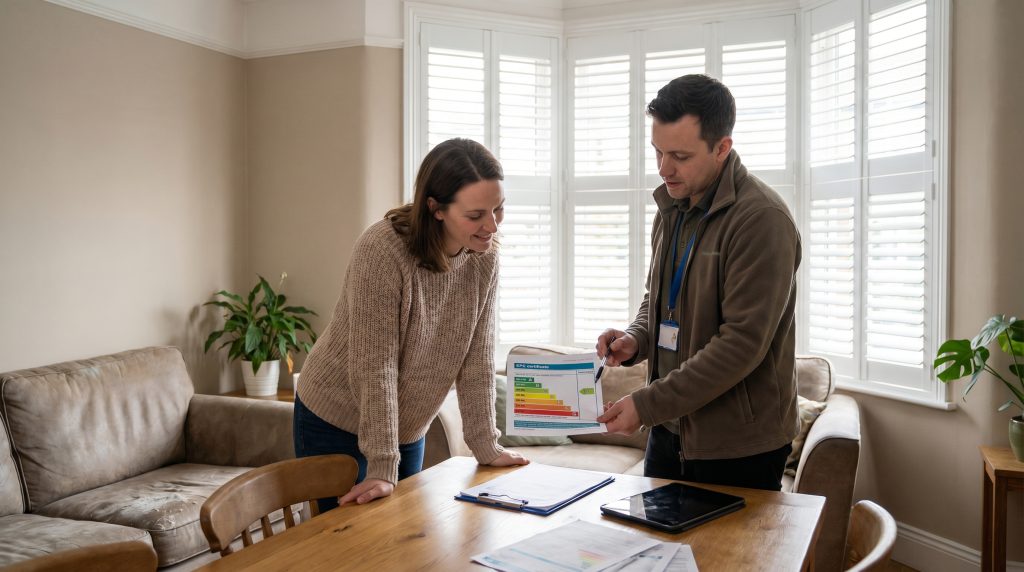
The material science behind Thermalite is what gives it its certified EPC boosting qualities.
The three factors that define the material
Below are the three specifications that separate Thermalite Ultra-Clear® from every other shutter material on the UK market. These are the figures a trade professional should know by heart, because they’re the figures that close the “but isn’t it just plastic” conversation in a single sentence.
Cured, Not Melted | Set by chemical reaction, not by temperature. The reason Thermalite holds its form in heat and cold while PVC bows, warps and twists.
1.1–1.2 g/cm³ Density | Roughly twice the density of wood and PVC shutters (0.25–0.75 g/cm³). The structural foundation behind the 62% heat loss figure.
Heights to 3 Metres, No Midrail | Mortise and tenon joints — the same joinery used in fine furniture — bond the panel structurally rather than mechanically.
Density is the number that matters most
Density is the single biggest driver of both insulation performance and structural integrity in any shutter panel. The denser the material, the more thermal mass it carries, the more effectively it interrupts heat transfer through the window opening, and the more rigid the panel remains over time. Thermalite Ultra-Clear® has a density of 1.1 to 1.2 grams per cubic centimetre. By comparison, wood and PVC shutters typically measure between 0.25 and 0.75 g/cm³ — meaning Thermalite is, on average, roughly twice as dense as anything else in the shutter category.
This is not a marketing claim. It is the reason a Thermalite panel can deliver a certified 62% reduction in heat loss at Energy House Labs in Salford, and it is the reason the panel can be manufactured up to 3 metres in height without requiring a midrail to keep it straight.
A PVC shutter at the same height would need at least one structural break across the panel, and frequently two — interrupting the visual line, complicating the install, and creating additional failure points over time.
Built like furniture, not assembled like flatpack
Most shutters on the UK market are assembled with glue, screws, staples or pin fixings. Thermalite Ultra-Clear® is built using mortise and tenon joints — the same joinery technique cabinetmakers have used in fine furniture for centuries. A tenon (a precisely cut tongue) is inserted into a mortise (a precisely cut socket) on the receiving piece, and the joint becomes a structural part of the panel rather than a mechanical fastening. The result is a shutter that behaves as a single bonded structure under load and across temperature changes, rather than a collection of parts held together by adhesive that degrades over time.
The Ultra-Clear® Mechanism — Patented, Exclusive, Engineered to End Call-Outs
The single biggest aftercare cost for any shutter business is the tilt-rod call-out. The external rod loosens, the louvres droop, the customer rings the showroom, and a fitter is back on site within twelve to eighteen months of the original install. Thermalite Ultra-Clear® replaces that external tilt rod entirely with a patented and exclusive internal mechanism built around a titanium rack and nylon pin system.
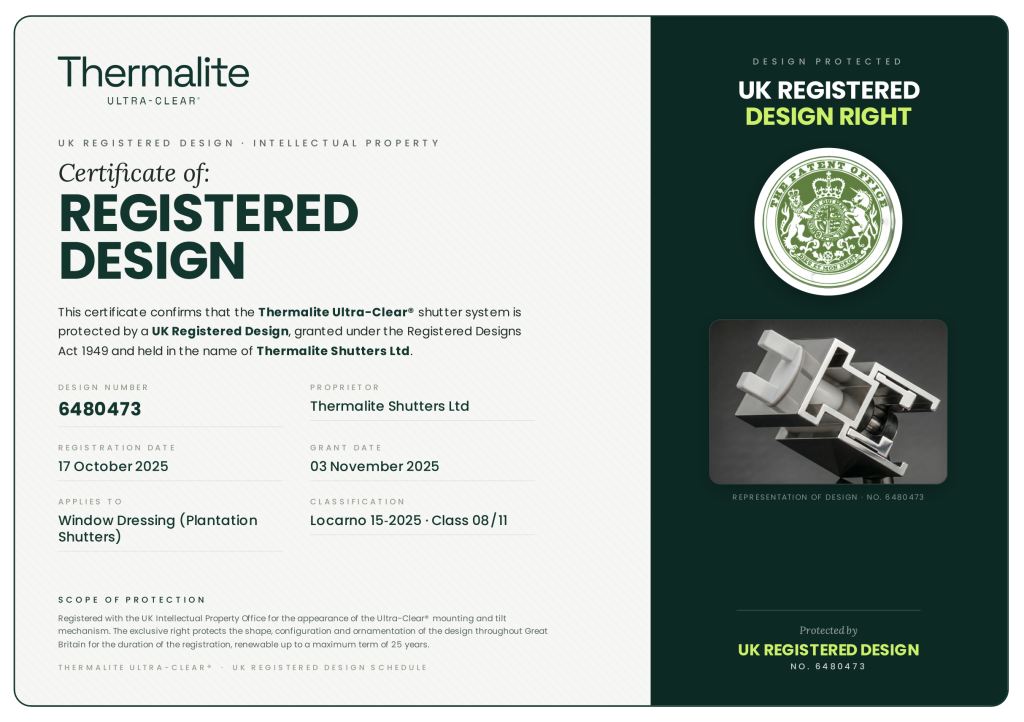
Titanium for strength and corrosion resistance; nylon for silent, friction-free motion. The louvres move as a single unified bank, the front face of the shutter is uninterrupted by hardware, and the failure mode that produces the bulk of warranty call-outs across the rest of the category is engineered out of the product completely.
ThermaColour the two-pack polyurethane UV finish — why Thermalite doesn’t yellow, fade or chip
PVC yellows in sunlight. Painted wood chips at the slat edges. Low-grade composite finishes discolour and lose their depth within five years of installation. Thermalite Ultra-Clear® is finished in a polyurethane UV-protective paint — a coating class engineered to retain colour and remain unaffected by sunlight across the full lifespan of the panel. The same finish is also fire retardant, water resistant, and anti-scratch, meaning the panel that goes on the wall on install day is the panel that is still on the wall, looking identical, twenty-five years later.
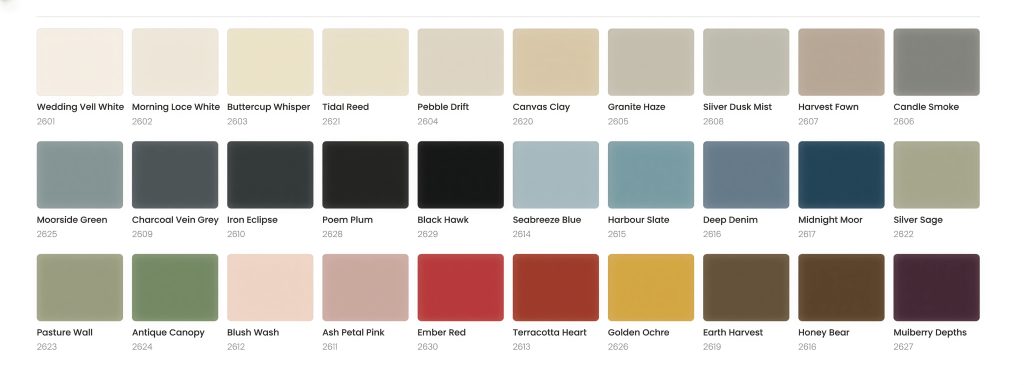
This is the specification trade professionals tend to underweight in customer conversations, and it shouldn’t be. A shutter that yellows is a shutter that gets ripped out and replaced. A shutter that retains its finish for the lifetime of the property is an asset. The difference between those two outcomes is the coating system on the panel.
25-Year Transferable Guarantee — The Longest in the UK Market
A 25-year guarantee is only possible because the materials behind it earn it. The polyphane core, the cured polymer structure, the mortise and tenon joints, the titanium-and-nylon mechanism, and the polyurethane finish are each engineered to outlast the equivalent components in every other shutter on the market — and the guarantee follows the property, not the buyer.
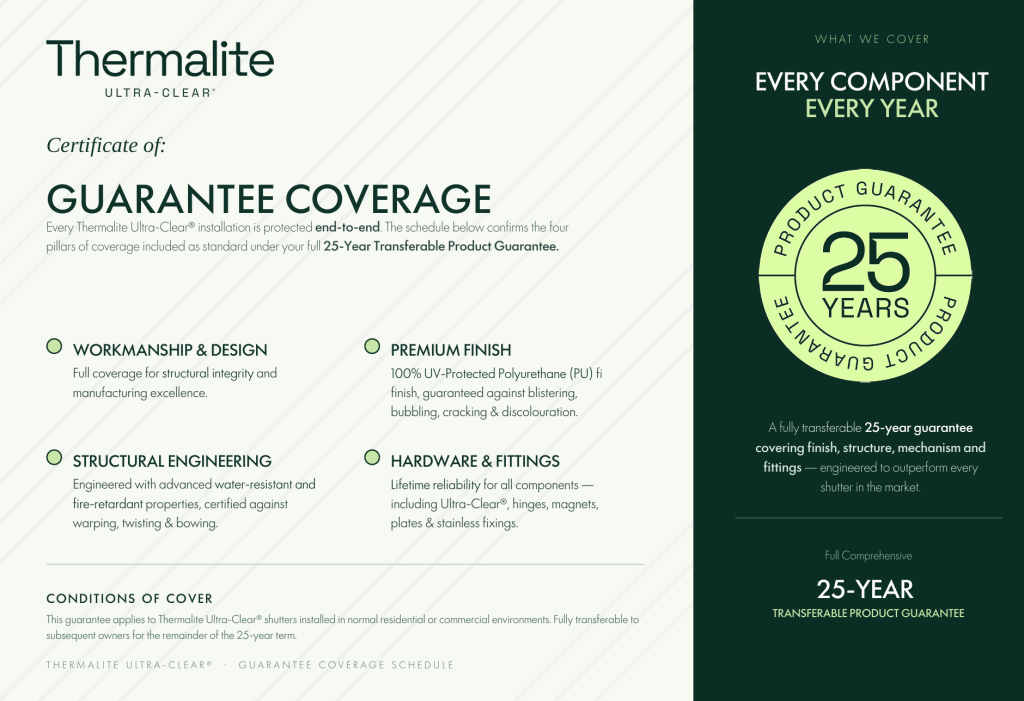
For landlords, that’s an asset upgrade that survives tenant turnover. For homeowners, it’s a value-add that travels with the home on resale. No PVC shutter manufacturer in the UK offers anything close to it, because no PVC shutter can structurally support the claim.
Thermalite vs PVC vs wooden shutters — the category, side by side
The cleanest way to settle the “isn’t it just plastic” question is to put the three categories next to each other and let the specifications speak. The figures below are based on UK market averages for PVC and wooden shutters, and on certified Thermalite Ultra-Clear® test data.
PVC
Shutters
Material: Extruded PVC, melted then cooled
Density: 0.25–0.75 g/cm³
Joinery: Glued, screwed or pinned
Mechanism: External tilt rod, prone to drooping
Finish: Yellows in sunlight over time
Dimensional stability: Bows, warps, twists with heat
EPC contribution: None certified
Guarantee: Typically 3–10 years
Wooden
Shutters
Material: Hardwood or MDF core
Density: 0.4–0.75 g/cm³
Joinery: Glued or doweled
Mechanism: External tilt rod
Finish: Paint or stain — chips at slat edges
Dimensional stability: Warps in damp; not water resistant
EPC contribution: None certified
Guarantee: Typically 5–10 years
Thermalite Ultra-Clear®
Material: High-density polyphane, cured not melted
Density: 1.1–1.2 g/cm³ (roughly 2× the rest)
Joinery: Mortise and tenon, structurally bonded
Mechanism: Patented internal titanium rack & nylon pin
Finish: Polyurethane UV — fire retardant, anti-scratch, water resistant
Dimensional stability: Won’t bow, warp or twist in heat or cold
EPC contribution: Certified, lab-tested at Energy House Labs
Guarantee: 25 years, transferable with the property
Category-defining, not category-competing
Most product launches in the shutter category over the past two decades have been incremental — a new colour range, a refined finish, a slightly stronger hinge. Thermalite Ultra-Clear® is not an incremental product. It sits in a different material category, with a different manufacturing process, a different joinery system, a different mechanism, a different finish and a different guarantee. The reason it can be certified as the world’s first and only energy-saving shutter is not branding — it is the cumulative effect of every one of those engineering choices working together.
So when the question lands — “isn’t this just plastic?” — the honest, evidence-led answer is the one that closes the conversation: no, it isn’t. It’s high-density polyphane, cured not melted, twice as dense as wood or PVC, joined like furniture, mechanised in titanium and nylon, finished in marine-grade polyurethane, and guaranteed for a quarter of a century. That’s not a shutter. That’s a category.
See the material difference for yourself.
Book a Thermalite Ultra-Clear® consultation with the Absolute Shutters team and see the polyphane core, the Ultra-Clear® mechanism and the polyurethane finish in person. Trade enquiries welcome — county-level territory exclusivity available for partners.
Leave a Reply